
Summary
- ETF.com – (August 6, 2018) David Nadig: Camp Kotok: Zero Ain’t Your Hero
To me, the ultimate “unbundling” will occur as firms eschew the fund structure altogether. Firms like M1 Finance are already starting to break the mold of what a “fund” even is, allowing investors to subscribe to security lists and then own them as fractional shares. Instead of owning an S&P 500 ETF or mutual fund, I see a world where I simply “subscribe” to the S&P 500, and the actual implementation is handled at the single-stock level by my broker. If that seems far-fetched, it’s already reality for M1 and some robo advisors like Wealthfront. It has a few real advantages—the ability to easily skew a portfolio along environment, social, governance lines, and single-stock tax-loss harvesting, to name a few. Such a structure gets rid of the last middleman (the fund issuer itself), and creates a direct relationship with the actual investment intellectual property (the index or portfolio manager).
- ETF.com – (July 12, 2018) David Nadig: Live Chat: Understanding ETF.com’s Stock Finder
Question: What are your thoughts on using M1 Finance to buy and hold ETFs using the dollar-cost average given an investment horizon of 30 years and $200 per month contributions? Thank you.
Dave Nadig: M1 is super interesting! They’re basically a version of something like Sharebuilder.com but with a few twists. It’s a brokerage, so you put money in, and instead of buying specific shares, you simply build a “pie” of what you want your portfolio to look like. That can be 6 ETFs, or it could be 200 individual stocks.
Once a day, they go aggregate all the positions their customers want across every single account and stock/etf, and they make the firm’s overall position match, and they keep track of each person’s fractional ownership. That means you can own 4 dollars of Berkshire Hathaway or 22 cents of SPY. It solves one issue with ETFs that a lot of Robos have also solved, which is that you cant own a partial share. They also don’t charge any fees or commissions for managing your “pie” or moving money in and out.
So I’m a big fan, actually.
I also think services like this (and there are competitors), are the thin end of the wedge towards direct indexing. There’s no reason your “pie” couldn’t be “all the stocks in the S&P 500.” At that point, M1 has disintermediated the ETF companies entirely! There are some technical and some licensing hurdles to overcome, but I don’t think it’s a stretch to imagine a world where investors and advisors “subscribe” to an index from, say Research Affiliates, and have it just implemented for them by M1 at the security level.
I think it’s exciting, and a potential issue for the big issuers! Here’s a sort of related question:
Question: Wealthfront offers single-stock tax-loss harvesting. How does that work with ETFs?
Dave Nadig: Essentially this is what Wealthfront is doing – direct indexing. I think they even call it that, or used to. Instead of buying ETFs, you buy full portfolios that track an index. The twist here is, since you own each security (legally, and from a tax perspective) they can sell your losers to make your taxes easier.
Again, super interesting. There are some hiccups in implementing something like this the M1 way – I believe there are some reporting and taxation hurdles to making this as cool as it could be. But again, I think it’s kind of the future of indexing. It may just take 15 years to get exactly right.
What you sacrifice of course, is trading. Getting fractional shares and daytrading seem like an impossible hurdle, without someone taking a lot of operational risk.
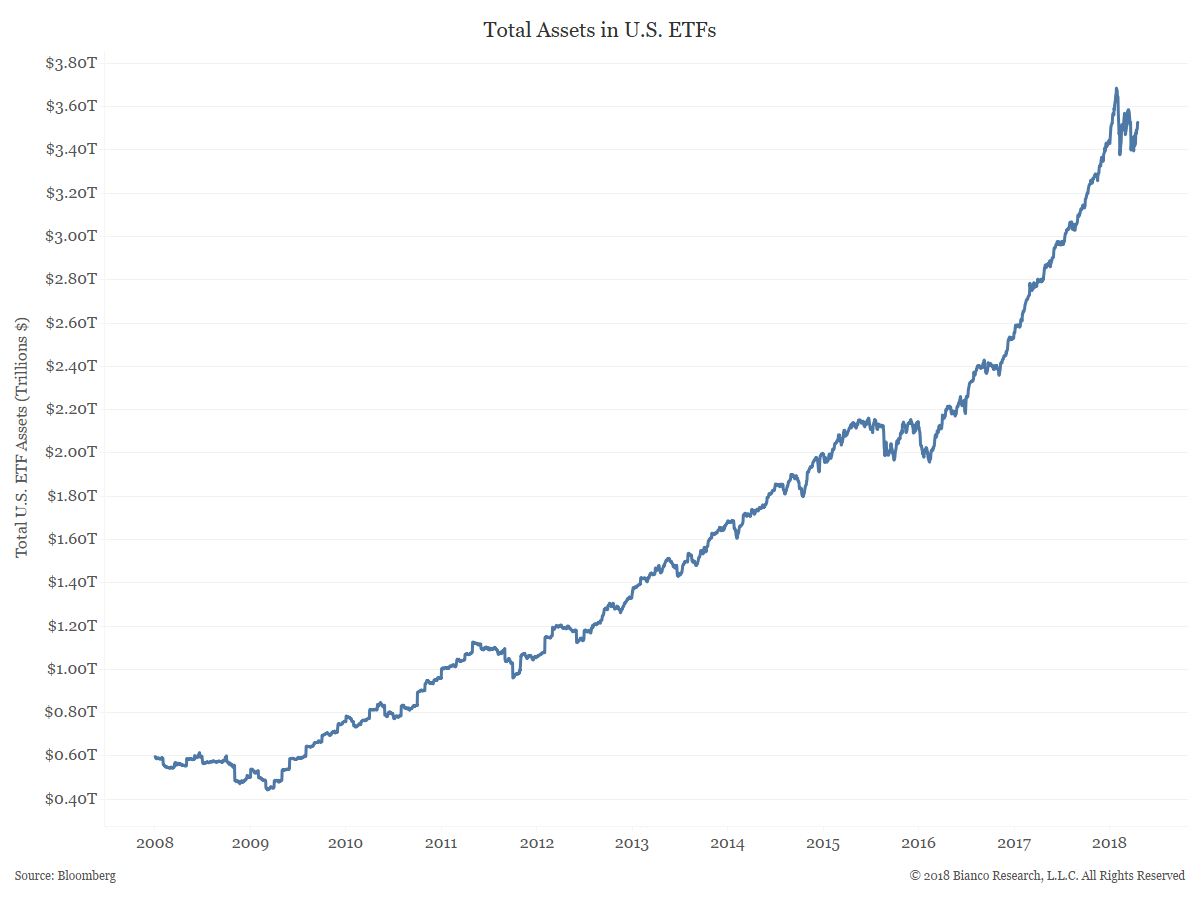
While everyone is obsessing about ETFs consuming the financial industry, and now at zero fees to boot, quietly a new disruptive force may be coming … abandoning the fund structure altogether in favor of “subscribing” to stock lists, made possible by fractional share ownership.